Toldos: Two Nations Inside You
This is the handout for this week’s Pizza & Parsha on Parshas Toldos: the story of Yaakov and Esav in 22 short readings, from Rivka’s struggle to the history of the two nations, the two souls inside each of us, and six tools to try this week. Listen to it read aloud (23 min), read it below, or download the PDF (print-friendly or full colour).
Pizza & Parsha · Parshas Toldos
Learn this in person with Rabbi Fuchs: Wed 11 Nov, 7:30-8:30 pm (London). Fresh pizza, a lively discussion, for university students and post grads. Location shared when you RSVP.
Two Nations Inside You
The Story
Reading 1 · Yitzchak, Rivka and the prayer
וַיְהִי יִצְחָק בֶּן־אַרְבָּעִים שָׁנָה בְּקַחְתּוֹ אֶת־רִבְקָה ... וַיֶּעְתַּר יִצְחָק לַה׳ לְנֹכַח אִשְׁתּוֹ כִּי עֲקָרָה הִוא וַיֵּעָתֶר לוֹ ה׳
Yitzchak was forty when he married Rivka, the sister of Lavan. He prayed to Hashem opposite his wife, because she could not have children, and Hashem answered him.
Rashi says Rivka came from a wicked father, a wicked brother and a wicked town, yet she did not learn from them. She and Yitzchak each prayed in their own corner. The Torah says Hashem answered “him”, because the prayer of a tzaddik whose parents were also tzaddikim is stronger.
Reading 2 · The struggle inside
וַיִּתְרֹצְצוּ הַבָּנִים בְּקִרְבָּהּ וַתֹּאמֶר אִם־כֵּן לָמָּה זֶּה אָנֹכִי וַתֵּלֶךְ לִדְרֹשׁ אֶת־ה׳
The children struggled inside her. She said, “If so, why am I like this?” and she went to ask Hashem.
Rashi says the word vayisrotzetzu comes from “running”. When Rivka walked past the study hall of Shem and Ever, Yaakov kicked to get out. When she passed a house of idols, Esav kicked to get out. Another view is that the twins were already fighting over who would inherit this world and the next. Rivka went to ask at the study hall of Shem.
Reading 3 · Hashem’s answer
שְׁנֵי גוֹיִם בְּבִטְנֵךְ וּשְׁנֵי לְאֻמִּים מִמֵּעַיִךְ יִפָּרֵדוּ וּלְאֹם מִלְאֹם יֶאֱמָץ וְרַב יַעֲבֹד צָעִיר
“Two nations are in your womb. Two peoples will separate from inside you. One will be stronger than the other, and the older will serve the younger.”
Rashi explains that from the womb they go separate ways, one towards wickedness and one towards wholeness. They will never both be great at once: when one rises, the other falls. Rashi also says the “two nations” hint at two great men who would come from them: Antoninus, the Roman emperor, and Rebbi, Rabbi Yehuda HaNasi, the leader of the Jewish people (Avodah Zarah 11a).
Later commentators explain that this answer calmed Rivka. She had been afraid that one child was being pulled in two directions. Now she knew there were two different children, each with his own path.
Reading 4 · Holding the heel
וְאַחֲרֵי־כֵן יָצָא אָחִיו וְיָדוֹ אֹחֶזֶת בַּעֲקֵב עֵשָׂו וַיִּקְרָא שְׁמוֹ יַעֲקֹב
Then his brother came out, his hand holding Esav’s heel, and he was named Yaakov.
Rashi says the hand on the heel was a sign. Esav would barely finish his time of power before Yaakov rose and took it from him. Rashi adds that Yaakov was really the firstborn, because he was conceived first, and he was trying to hold his brother back.
Rivka’s children struggled before they were even born. Where do you feel two pulls inside yourself?
Reading 5 · The boys grow up
וַיִּגְדְּלוּ הַנְּעָרִים וַיְהִי עֵשָׂו אִישׁ יֹדֵעַ צַיִד אִישׁ שָׂדֶה וְיַעֲקֹב אִישׁ תָּם יֹשֵׁב אֹהָלִים
The boys grew up. Esav became a skilled hunter, a man of the field. Yaakov was a wholesome man who sat in the tents.
Rashi says that while they were small, you could not tell them apart. At thirteen, one went to the study hall and the other went to idols. Yaakov’s “tents” were the study halls of Shem and of Ever.
The Midrash compares them to a myrtle and a thorn bush growing side by side. While they are small, they look alike. Once grown, one gives off its scent and the other its thorns (Bereishis Rabbah 63:10).
Reading 6 · The hunter and the wholesome man
וַיֶּאֱהַב יִצְחָק אֶת־עֵשָׂו כִּי־צַיִד בְּפִיו וְרִבְקָה אֹהֶבֶת אֶת־יַעֲקֹב
Yitzchak loved Esav, for there was hunt in his mouth. But Rivka loves Yaakov.
Rashi says Esav hunted with his mouth too. He fooled his father with clever questions, such as how to give maaser from salt and straw, so that Yitzchak would think he was careful with mitzvos. In fact he wasn’t. Yaakov was the opposite. He was tam: his mouth said what his heart felt, and he was not clever at fooling people.
Notice the words: Yitzchak “loved” Esav, in the past, and the Torah gives a reason. Rivka “loves” Yaakov, in the present, with no reason given. The Midrash says that every time she heard his voice, her love for him grew (Bereishis Rabbah 63:10).
Esav looked holy from the outside. Why is that more dangerous than someone who is openly bad?

Reading 7 · The stew and the birthright
הַלְעִיטֵנִי נָא מִן־הָאָדֹם הָאָדֹם הַזֶּה כִּי עָיֵף אָנֹכִי
One day Esav came in from the field, exhausted, and saw Yaakov cooking a red lentil stew. “Pour some of this red, red stuff into me,” he said, “because I am tired.” That is why he was called Edom, “red”. Yaakov asked him to sell the birthright, and Esav answered, “I am going to die anyway; what good is a birthright to me?” He ate, drank, got up and left. The Torah sums it up: Esav despised the birthright (25:29–34).
Rashi explains that in those days the firstborn performed the service of offerings to Hashem. When Esav heard that mistakes in this service could carry the death penalty, he said, “I am going to die because of it.” He did not want the responsibility. He traded something eternal for something he wanted that minute.
Reading 8 · Yitzchak’s wells
וַיִּזְרַע יִצְחָק בָּאָרֶץ הַהִוא וַיִּמְצָא בַּשָּׁנָה הַהִוא מֵאָה שְׁעָרִים וַיְבָרְכֵהוּ ה׳
Yitzchak sowed in that land and reaped a hundred times over that year, and Hashem blessed him.
A famine came, and Hashem told Yitzchak not to go down to Egypt. Rashi explains: you are a perfect offering, an olah temimah, and leaving the Land is not fitting for you. So Yitzchak stayed and farmed. Rashi says the harvest was measured so that he could give maaser from it.
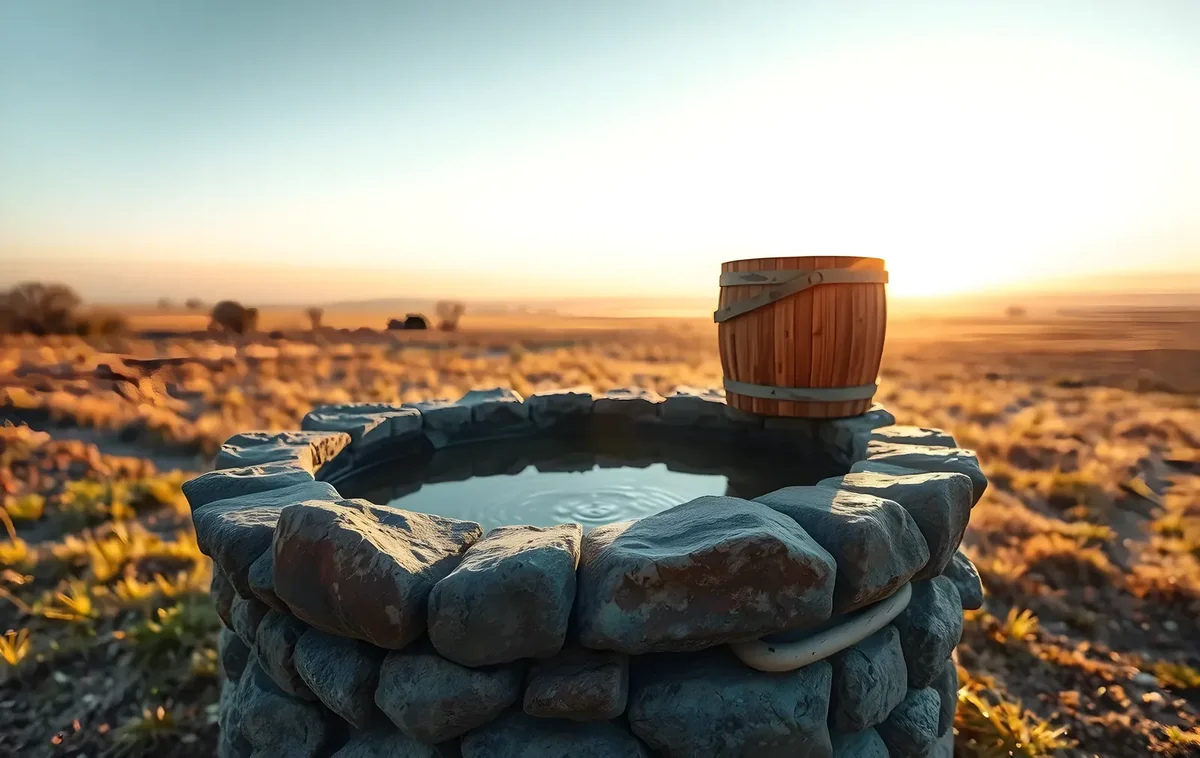
The Plishtim were jealous and filled his father’s wells with earth. Yitzchak dug them again. He named the next well Esek, “quarrel”, and the one after Sitnah, “hatred”, because the shepherds fought over them. Nobody fought over the third, so he named it Rechovos, “space”: “Now Hashem has made room for us” (26:18–22).
Chassidus explains that you dig a well by taking away earth until the living water appears. That is Yitzchak’s way: digging through the layers to reach the spring of G-dliness already hidden in the world and in every soul.
What “earth” has been piled over your own well?
Reading 9 · The voice and the hands
הַקֹּל קוֹל יַעֲקֹב וְהַיָּדַיִם יְדֵי עֵשָׂו
When Yitzchak grew old and blind, he asked Esav to hunt for him so he could bless him. Rivka heard, and sent Yaakov in first, dressed in Esav’s clothes, with goatskins on his hands and neck. Yitzchak felt him and said, “The voice is the voice of Yaakov, but the hands are the hands of Esav.” Then he blessed him with the dew of the heavens, the richness of the earth, and plenty of grain and wine (27:28).
Rashi notes that Yaakov spoke gently. He said “please” and mentioned Hashem’s name, which Esav never did. Yaakov could wear Esav’s clothes and still be Yaakov.
And Esav was not all bad. The Sages say he honoured his father in a way few people ever have. Rabban Shimon ben Gamliel said that he served his own father with great care, yet did not reach even one hundredth of the way Esav served his (Devarim Rabbah 1:15).
When One Rises, the Other Falls
Hashem told Rivka that the two nations would never be great at the same time. From Rome onwards, Jewish history shows how true that is.
Reading 10 · The emperor who bent down
Rashi gave us a hint: the “two nations” in Rivka’s womb include two great men. One was Antoninus, emperor of Rome. The other was Rebbi, Rabbi Yehuda HaNasi, the leader of the Jewish people who compiled the Mishnah. The two were close friends.
Antoninus had a secret tunnel dug from his palace to Rebbi’s house so they could meet without anyone knowing. He asked Rebbi’s advice, and he used his power to protect the Jewish people. On his visits he served Rebbi food and drink with his own hands. When Rebbi wanted to get into bed, the emperor of Rome would bend down on the floor and say, “Climb onto me to get up to your bed.” Rebbi protested that a king should not be treated so lightly. Antoninus answered, “If only I could be a mattress under you in the World to Come!” (Avodah Zarah 10b).
They talked about deep questions too. Once Antoninus asked when the yetzer hara, the urge to do wrong, enters a person. Rebbi said from when the baby is formed in the womb. Antoninus objected: if so, the baby would kick its way out! It must come at birth. Rebbi agreed, and said that Antoninus had taught him this (Sanhedrin 91b). Keep this in mind; we will come back to it.
Picture it: the ruler of Esav’s nation on the floor, serving the leader of Yaakov’s. The elder serving the younger.
Reading 11 · One rises, the other falls
That friendship was rare. Most of history looks more like a seesaw. The Gemara says: if someone tells you that Caesarea, Rome’s capital in the Land of Israel, and Jerusalem are both destroyed, don’t believe it. If they tell you both are flourishing, don’t believe that either. When one is built up, the other is laid low (Megillah 6a). This is the hand on the heel from Reading 4.
The lowest point came in the year 70 CE, when the Roman general Titus destroyed the Second Temple. Tehillim had already cried out, “Remember, Hashem, against the children of Edom, the day of Jerusalem, when they said: Raze it, raze it, to its very foundation” (Tehillim 137:7).
Titus walked into the Holy of Holies and mocked Hashem. The Gemara says Hashem answered his arrogance with one of the smallest of creatures: a gnat flew up his nose and gnawed at his brain for seven years until he died (Gittin 56b).
Reading 12 · The fox, the laugh, and the ending
Years after the destruction, Rabbi Akiva walked up to Jerusalem with Rabban Gamliel, Rabbi Elazar ben Azarya and Rabbi Yehoshua. On the Temple Mount they saw a fox run out of the place where the Holy of Holies had stood. The others began to cry. Rabbi Akiva laughed.
“Why are you laughing?” they asked. He explained that the prophets had foretold both the destruction and the rebuilding. Now that the prophecy of destruction had come true so exactly, he knew the prophecy of rebuilding would come true too. They answered, “Akiva, you have comforted us” (Makkos 24b).
We are still living in the exile that Rome began, called Galus Edom, the exile of Edom. But the ending is promised. The prophet Ovadiah says, “Saviours will go up on Mount Zion to judge the mountain of Esav, and the kingship will be Hashem’s” (Ovadiah 1:21). We say this verse every morning, right after Az Yashir. And when Yaakov parted from Esav, he told him, “I will come to my master in Seir” (Bereishis 33:14). Rashi explains that this meeting is still waiting: it will happen in the days of Moshiach.
Rabbi Akiva looked at the same ruins as everyone else and saw a promise. When has something that looked like an ending turned out to be a beginning?
The Struggle Inside Every One of Us
Reading 13 · Two souls
The Alter Rebbe, Rabbi Schneur Zalman of Liadi, teaches in the Tanya that the struggle Rivka felt is happening inside each of us. Every Jew has two souls (Tanya, chapters 1–2).
The first is the Nefesh HaBahamis, the animal soul. It cares about comfort, food, sleep and “what’s in it for me”. It is not evil, but it is focused on itself.
The second is the Nefesh HaElokis, the G-dly soul, which the Tanya calls “truly a part of G-d above”. It longs to be close to Hashem, to learn Torah and do mitzvos. In chapter 9, the Tanya compares the body to a “small city” that both souls are fighting to rule.
Reading 14 · Tohu and Tikkun
Chassidus explains the brothers through two “worlds” described in Kabbalah.
Tohu, chaos, had enormous light in vessels that were too small, so the vessels shattered. Its energy is intense and all-or-nothing. Esav comes from Tohu. That is why he is passionate, impatient and powerful, and why his energy breaks things. Think of the stew: “Pour it into me, now.”
Tikkun, repair, has less light but strong vessels that work together. Yaakov comes from Tikkun. He is measured, patient and balanced. His job is not to destroy Esav’s energy, but to bring that great light into strong vessels. This also explains why Yitzchak loved Esav: he saw how high the root of that energy really was.
Reading 15 · The elder will serve the younger
Now the parsha comes alive inside us. Like Esav and Yaakov, our two souls compete: when one grows stronger, the other grows weaker.
The animal soul is the “elder”. Remember what Antoninus taught Rebbi: the urge to do wrong is with us from the moment we are born. The G-dly soul fully comes of age later, at bar or bas mitzvah, just as the twins went their separate ways at thirteen. Hashem promised Rivka that “the elder will serve the younger.” The goal is not to destroy the animal soul, but to make it serve the G-dly soul: to take its energy, passion and drive and use them for holiness.
That is exactly the picture of Antoninus and Rebbi: the mighty emperor of Esav’s nation, with all his power and wealth, bending down to help the Torah leader of Yaakov’s, and using his strength to protect the Jewish people.
And remember Rivka’s relief. Feeling pulled in two directions doesn’t mean something is wrong with you. It means you are exactly the way Hashem made you, and every time you choose the good, you are doing the very work you were created for.
What is one thing your “animal soul” loves that could be used for something holy? (For example: energy for a mitzvah, a good appetite for a Shabbos meal.)
Your Inner Yaakov and Esav
Every idea in Toldos becomes a practical tool once you see that Yaakov and Esav live inside you. Each reading ends with something to try this week.
Reading 16 · Your intensity is not your enemy
Your anger, ambition, competitiveness and appetite are Esav’s energy. Their root is high, from Tohu. The question is never “How do I kill this drive?” but “What vessel can hold it?”
The Torah describes Esav as admoni, red. Many years later, when Shmuel came to anoint David, the Torah calls David admoni too (Shmuel I 16:12). The Midrash says Shmuel was frightened, thinking David might shed blood like Esav. Hashem reassured him: Esav acts on his own wishes, but David will act only with the approval of the Sages (Bereishis Rabbah 63:8). Same fire, held by Torah.
A person with a fierce temper may become a fierce defender of the vulnerable. A restless, ambitious person may build an institution.
Name one strong trait you usually fight. Write down one place it could serve holiness this week.
Reading 17 · Don’t sell the birthright for the stew
Esav came in tired and said, “Pour it into me, now.” He traded something eternal for something he wanted in that moment. That is Tohu: all appetite, no patience.
Yaakov’s way is the opposite. Grasp the heel first. Refine one small habit, then the next. Chassidus calls our generation ikvesa diMeshicha, the “heel” of Moshiach’s time (a phrase from Sotah 49b), and Yaakov is the one who holds the heel.
Instead of a sweeping resolution, choose one concrete daily act for the next 30 days.
Reading 18 · Bring the tent into the field
Yaakov sat in the tents, but the blessings he received were for the field: dew, grain and wine. Yitzchak himself farmed the land, reaped a hundredfold, and measured it to give maaser. The Chassidic path does not ask you to withdraw from work, money or the world.
Your office, business and phone are the field. The test is whether you stay ish tam, the same person there as in shul. Yaakov could wear Esav’s clothes and still be Yaakov.
Pick one area of your working life where your standards slip. Ask what Yaakov’s integrity would look like there.
Reading 19 · Keep digging
The Plishtim kept filling Yitzchak’s wells with earth. He did not give up. The first well brought a quarrel and the second brought hatred, but the third brought Rechovos: space and blessing.
Every soul has a spring of living water under the earth of habits, worries and distractions. A hard period, a failure or a difficult relationship can be part of the digging. Keep going until you reach Rechovos.
Think of a past struggle. What did you find underneath it that you would not have found otherwise?
Reading 20 · Strengthen the voice
“The voice is the voice of Yaakov, and the hands are the hands of Esav.” The Midrash teaches that when Yaakov’s voice is heard in shuls and study halls, Esav’s hands have no power (Bereishis Rabbah 65:20).
When you face pressure, temptation or a difficult person, your strength is your voice: prayer and Torah. Notice too that Yaakov’s voice was gentle; he said “please”. Lead with softness, turn to Hashem, and be firm where you must.
Before your next hard conversation, take one minute to daven for it. Then speak gently and stand firm.
Reading 21 · You are part of the long refinement
Rashi says the two nations will never be great at the same time. The heel in Yaakov’s hand is a promise: at the end, Yaakov rises. Each mitzvah done in the field, each refined trait and each honest deal is part of that slow journey.
Chassidus teaches that the days of Moshiach will be Tohu’s light in Tikkun’s vessels. The Gemara even says that in the future we will turn to Yitzchak and call him “our father” (Shabbos 89b). Your passion, contained by Torah, is a small preview of that world.
At the end of each day this week, note one moment when your passion was held by Torah.
The Fire and the Well
Reading 22 · The fire and the well
The same red fire burned in Esav and in David. Esav let it run wild; David let Torah hold it. And under all the earth the world piles on us, Yitzchak’s well is still there, waiting to be dug.
Each of us has that fire and that well. The work of a lifetime is not to put out the fire, but to give it a vessel, and to keep digging until the living water flows.
- Rashi says the boys looked the same until thirteen. Is character fixed, or chosen?
- Why would the Sages praise Esav’s honouring of his father?
- Was Rivka right to send Yaakov in? What did she see that Yitzchak didn’t?
- Why did Yitzchak keep re-digging his father’s old wells instead of only digging new ones?
- Which of the six tools speaks to you most right now, and why?
- Chumash: Bereishis 25:19–28:9 (Parshas Toldos); Bereishis 33:14; Shmuel I 16:12; Tehillim 137:7; Ovadiah 1:21.
- Rashi on the verses above.
- Midrash: Bereishis Rabbah 63:8, 63:10, 65:20; Devarim Rabbah 1:15.
- Gemara: Avodah Zarah 10b, 11a; Megillah 6a; Sanhedrin 91b; Gittin 56b; Makkos 24b; Shabbos 89b; Sotah 49b.
- Chassidus: Tanya ch. 1–2 and 9 (the two souls); Torah Or and Likkutei Sichos on Toldos (Tohu and Tikkun).
A Pizza & Parsha journey through Parshas Toldos, for group learning with Rabbi Shlomo Fuchs. Sources are cited in the text. Layout: Live613 · live613.com
Pizza & Parsha · Parshas Toldos
Learn this in person with Rabbi Fuchs: Wed 11 Nov, 7:30-8:30 pm (London). Fresh pizza, a lively discussion, for university students and post grads. Location shared when you RSVP.
Questions people ask
What does "two nations inside you" mean in Parshas Toldos?
Hashem told Rivka that two nations were in her womb, Yaakov and Esav. The Tanya teaches that the same struggle happens inside each of us: every Jew has an animal soul and a G-dly soul (Tanya, chapters 1-2).
Why did Esav sell the birthright for lentil stew?
Rashi explains that the firstborn performed the service of offerings, and mistakes in it could carry the death penalty. Esav did not want the responsibility, so he traded something eternal for something he wanted that minute.
What does "the voice is the voice of Yaakov, but the hands are the hands of Esav" mean?
Yitzchak said it when Yaakov came in wearing Esav's clothes (Bereishis 27:22). The Midrash teaches that when Yaakov's voice is heard in shuls and study halls, Esav's hands have no power (Bereishis Rabbah 65:20).
What are Tohu and Tikkun?
Two worlds described in Kabbalah. Tohu had enormous light in vessels too small to hold it, so they shattered; Esav comes from Tohu. Tikkun has less light but strong vessels; Yaakov comes from Tikkun, and his job is to bring that great light into strong vessels.
Why did Yitzchak keep re-digging the wells?
The Plishtim filled his father's wells with earth and he dug them again, until the third well, Rechovos, brought space and blessing. Chassidus explains that digging a well means removing the earth until the living water already there appears.
Can I print this handout?
Yes. Download the print-friendly PDF (black and white, with space for notes) or the full-colour PDF from the buttons at the top of the page.
Have a question about this teaching? Ask a rabbi →
Audio narration: AI-generated voice.